The song is the source of truth
Every performance, ornament, lyric, harmony, and export is judged against the actual section and chord progression—not generated in isolation.
Why SmartBridge exists
SmartBridge is an independent music-software project by Claudio Reyes—a Yamaha keyboard musician who wanted the arranger, the performed MIDI, Cubase, and the vocal workflow to understand the same song.
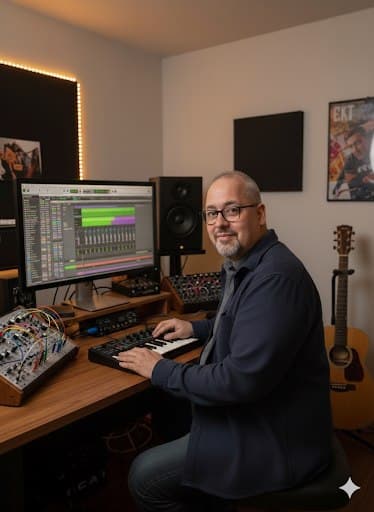 Claudio Reyes · Musician and creator of SmartBridge
The original problem
A musical idea could begin quickly on the keyboard, but the context did not travel. Voice names had to be reconstructed in Cubase. MIDI phrases had to be searched, transposed, and repaired. Lyrics, backing voices, brass, and strings each required a separate reconstruction of the same chord progression.
SmartBridge began by connecting the real rig: Yamaha voices, channels, effects, styles, Motif arpeggios, and Cubase. It then grew around one architectural rule—the chords, sections, key, and tempo should be defined once and understood everywhere.
That connected environment now combines a curated performance library, automatic Cubase track naming, Riff Extender, Solo Ornaments, melody-fitted lyrics, Synthesizer V transfer, and separate vocal, brass, and string harmony engines.
The way it is built
Every performance, ornament, lyric, harmony, and export is judged against the actual section and chord progression—not generated in isolation.
MegaVoice velocity layers, bank and program data, pitch bends, Yamaha style structure, USB MIDI, Cubase track mapping, and hardware state are part of the product—not edge cases.
SmartBridge is developed by the musician who uses it. Questions, compatibility problems, and musical feedback reach the person making the product decisions.
Built around real Yamaha workflows